

What Are the Best Newegg Alternatives for Tech Gear?
Last Updated: October 25, 2026
Quick Summary
The best Newegg alternatives for tech gear include Amazon for fast Prime shipping, Micro Center for in-person support, B&H Photo for broad inventory, and Austin's Electronics for gaming peripherals. The right choice depends on what you're buying, how fast you need it, and whether you prioritize price, speed, or specialized products.
- Amazon offers 1-2 day Prime delivery and 30-day returns on most electronics in metro areas.
- Micro Center provides in-store pickup to eliminate shipping costs and get staff compatibility confirmation.
- Price differences of $30-$50 per component are common; comparing total landed cost across retailers saves $100-$200 on a full build.
- Third-party sellers carry higher risk; buy only from sellers with thousands of reviews and ratings above 4.5 stars.
- Sales tax and shipping fees must be added to sticker price before comparing retailers, as they often erase advertised price advantages.
Table of Contents
- Why Shop for Newegg Alternatives for Tech Gear
- Best Places to Buy PC Parts Online
- Amazon vs. Newegg for PC Parts: Key Differences
- PC Component Price Comparison Across Retailers
- Buying Tech Gear from Third-Party Sellers: What to Check
- Shipping, Taxes, and Return Policies Compared
- Start Your Tech Upgrade at Austin's Electronics
- Frequently Asked Questions
Why Shop for Newegg Alternatives for Tech Gear
Newegg has dominated computer parts retail for years, but buyers now have more options for better prices, faster shipping, or specialized inventory, and knowing where to shop saves money whether you're building a gaming PC or upgrading peripherals.
The best Newegg alternatives for tech gear depend on what you're buying and how fast you need it. Some win on processor and GPU pricing, others specialize in peripherals or refurbished electronics.
This guide covers the best places to buy PC parts online, pricing strategies, shipping, returns, third-party seller risks, and regional availability.
Best Places to Buy PC Parts Online
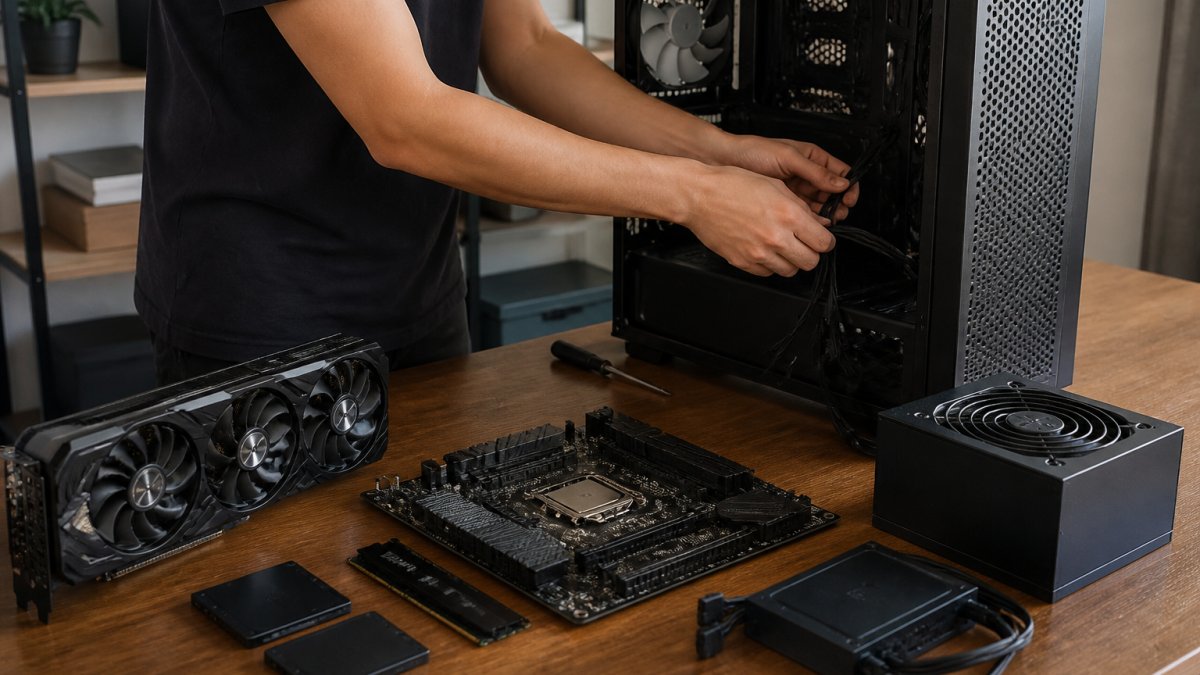
Amazon dominates in volume and convenience, with fast Prime shipping on most items. Micro Center serves online and in-store shoppers, especially enthusiasts who value expert staff.
Specialty retailers like Provantage and Tech Data serve individuals and small businesses with competitive bulk pricing and components mainstream retailers don't stock. Budget shoppers can also find aggressive pricing on older-generation and refurbished items. Explore budget smart home security kits as examples of tech gear available from alternative retailers.
Austin's Electronics offers high-performance gaming peripherals and specialized tech gear that complements your PC build, including gaming mice, wireless headphones with active noise cancellation, and portable projectors for gamers and content creators.
The key differences come down to inventory depth, pricing consistency, and customer service.
Amazon vs. Newegg for PC Parts: Key Differences
Amazon prioritizes convenience and speed: Prime means two-day or next-day delivery on thousands of items, and returns run 30 days on most electronics.
Newegg traditionally focused on PC enthusiasts, with more detailed product descriptions and stronger manufacturer relationships. Its return window is typically 30 days, but support is less forgiving on restocking fees.
Price comparison matters more than brand loyalty, the same graphics card might cost $50 more on one platform.
PC Component Price Comparison Across Retailers
Most "alternatives" lists call a store "competitive" and stop there, useless when you're deciding where to spend $1,200 on a build. Below is a need-based ranking with the purchase mechanics that actually change your total cost.
How this comparison was built
- Scope: PC components (CPU, GPU, motherboard, RAM, SSD, PSU, case) plus peripherals, networking gear, storage, and consumer electronics.
- What is compared: listed price band, shipping threshold and speed, sales-tax collection, return window and restocking-fee exposure, and seller-authenticity risk.
- What is not compared: live penny-level prices, which move weekly with supply and promotions. Use the price-check workflow below instead.
Prices on CPUs, GPUs, and SSDs change frequently. Treat every dollar figure in this section as a band, not a quote, and verify at checkout.
Ranked alternatives by shopper need
1. Best for speed and easy returns, Amazon. Prime delivery commonly lands in 1-2 days in metro areas, and the standard electronics return window is 30 days (Amazon Return Policy).
2. Best for enthusiast specs and detailed listings, Newegg. Strong component filtering, detailed spec sheets, and a 30-day return window on most items.
3. Best for in-person pickup and hands-on support, Micro Center. In-store pickup eliminates shipping cost and delay entirely, and staff can confirm compatibility before you leave.
**4.
**5.
**6.
Price bands you can expect (verify at checkout)
| Component | Typical new price band | Typical refurb/discount band | Where the spread is widest |
|---|---|---|---|
| Mid-range GPU | $300-$450 | $220-$350 | Marketplace vs. first-party listings |
| Mainstream CPU | $150-$350 | $110-$260 | Bundle deals with motherboards |
| 1TB NVMe SSD | $60-$120 | $40-$85 | Sales events and older generations |
| 16GB DDR5 kit | $50-$100 | $35-$75 | Speed/timing tiers |
| 750W Gold PSU | $90-$150 | $60-$110 | Brand and modularity |
| Gaming mouse | $30-$90 | $20-$60 | Wired vs. wireless |
A $30-$50 spread on a single component is common; across a full build, comparing two or three retailers routinely saves $100-$200, but only if you compare total landed cost.
The 5-minute price-check workflow
- Search the exact model number, not the marketing name. Retailers list the same card under different titles.
- Add shipping and tax to each cart before comparing. A lower sticker price with paid shipping can lose to a higher one with free shipping.
- Check the seller, not just the price. First-party vs. third-party changes the return window and warranty path.
- Set a price alert on at least two retailers. Prices drop when a new generation launches and during major sales events.
- Screenshot the listing (price, seller, condition, return policy) before you buy, it's your evidence if the order arrives wrong.
Buy the previous generation of a GPU or CPU only after the new generation has been on shelves for a few weeks. That is when clearance pricing typically appears, and the savings are usually larger than any single retailer's coupon.
HyperGear 20000mAh 20W PD + USB Power Bank →
Compatibility checking before you compare prices
A cheaper price is worthless if the part doesn't fit. Before comparing retailers, confirm socket compatibility, RAM generation (DDR4 vs. DDR5), PSU wattage headroom for your GPU, and case clearance for GPU length and cooler height. Use retailers' compatibility filters, then price-shop the exact model.
What this comparison does not tell you
It doesn't tell you which store will have stock on the day you buy. Inventory on popular GPUs and CPUs fluctuates, so confirm availability before committing to a build timeline, and keep a second-choice retailer bookmarked for each component.
Buying Tech Gear from Third-Party Sellers: What to Check
Third-party sellers on Amazon and other marketplaces offer competitive pricing but carry higher risk.
Check the listing carefully, counterfeit components exist, especially popular graphics cards and processors. Legitimate sellers provide detailed specs, warranty information, and return policies; if a listing lacks these, move on.
Examine the seller's return policy explicitly: some third-party sellers offer 14-day returns only, while others match Amazon's 30-day window, a difference that matters if a component arrives defective. Austin's Electronics provides guidance on buying refurbished electronics with warranty.
Ask whether the price difference justifies the added risk. Saving $20 on a $300 component may not be worth it if the seller refuses a return; established retailers provide peace of mind that sometimes outweighs lower prices.
Shipping, Taxes, and Return Policies Compared
Shipping speed, sales tax, and return terms are where two retailers with the same sticker price stop being the same deal. Here's how to calculate total landed cost before checkout.
Shipping: what actually determines your delivery date
- Fulfillment location, not retailer brand. A retailer with a warehouse near you can beat a "faster" competitor shipping from across the country. Check the estimated delivery date at checkout.
- Free-shipping thresholds. Many retailers waive shipping above a set cart value; below it, expect a flat fee. Adding a cheap accessory can cost less than the shipping fee.
- Expedited options. Overnight and two-day upgrades are priced per order, so consolidating a build into one order usually beats splitting it across stores.
Sales tax: why the same item costs different amounts
Sales tax is determined by your shipping address and the retailer's tax-collection obligations in your state, not its headquarters. After South Dakota v. Wayfair, states can require remote sellers to collect sales tax once they cross economic-nexus thresholds, so the old "buy out-of-state to skip tax" trick largely no longer works.
- Assume major retailers collect sales tax in most states.
- Smaller retailers may or may not collect; if they do not, you may owe use tax under your state's rules.
- Compare total cost including tax, not pre-tax price. A 6-9% sales-tax difference can erase a $20 price advantage on a $300 component.
Do not assume a lower sticker price is a lower total cost. Add shipping and tax to every cart before you decide.
Returns: the terms that actually matter
| Term | What to check | Why it matters |
|---|---|---|
| Return window | 15, 30, or 90 days from delivery | A 15-day window can expire before you finish a build |
| Restocking fee | 0%, 15%, or higher on opened items | A 15% fee on a $400 GPU is $60 |
| Return shipping | Free label vs. you pay | Can add $10-$30 per return |
| Condition rules | Opened vs. unopened, original packaging | Opened components may be non-returnable at some stores |
| Marketplace vs. first-party | Seller-specific policy | Third-party sellers often offer shorter windows |
Most major retailers offer a 30-day window on electronics, but the details diverge sharply on opened components. Before you buy, confirm three things: the return window for that specific SKU, whether a restocking fee applies to opened items, and who pays return shipping.
Warranty: who you actually call
Warranty coverage usually comes from the manufacturer, not the retailer, the retailer's job is to get you a replacement or return within its window. Keep the original packaging and proof of purchase, register the product if offered, confirm refurb warranty length in writing, and check whether the manufacturer honors the warranty for third-party marketplace inventory.
Total landed cost: a worked example
A $349 GPU at Retailer A with free shipping and 7% sales tax lands at about $373. The same GPU at $339 at Retailer B with $12 shipping and 7% tax lands at about $375. The cheaper sticker price is the more expensive purchase. Run this math for every component in a build; the differences compound.
Compare total landed cost, price plus shipping plus tax plus expected return risk, not the sticker price. The retailer with the lowest listed price is frequently not the cheapest option.
Regional availability and duties
Availability and tax treatment can differ by state and by whether the retailer ships domestically or internationally. If an item ships from abroad, confirm who pays duties and import fees before ordering, those charges are typically the buyer's responsibility and aren't shown in the cart total.
Start Your Tech Upgrade at Austin's Electronics
Building or upgrading a PC means sourcing components from multiple retailers: processors and graphics cards at Amazon and Newegg, and gaming peripherals from Austin's Electronics, which offers a curated selection of devices, wireless gaming earbuds with 60ms ultra-low latency, portable projectors, and fast-charging power solutions.
The best Newegg alternatives for tech gear aren't just about price, they're about the right products for your use case.
Frequently Asked Questions
What are the best Newegg alternatives for tech gear?
Austin's Electronics offers a comprehensive selection of tech gear including gaming peripherals, power banks, chargers, and headphones. The HyperGear 20000mAh Power Bank ($49.99) and CobraStrike Gaming Earbuds ($39.99) provide quality alternatives with fast charging and gaming-grade performance. Other options include major retailers with different inventory, pricing, and shipping policies depending on your needs.
Should I buy PC parts from Newegg or Amazon?
Both platforms offer PC components, but they differ in pricing, inventory, and seller policies. Amazon often has faster shipping through Prime, while Newegg specializes in tech components with detailed specs. Austin's Electronics provides curated tech gear like the SpeedBoost 65W Laptop Charger ($49.99), making it worth comparing alongside larger marketplaces.
What should I check before buying tech gear from a third-party seller?
Verify the seller's ratings, return policy, and warranty coverage. Check product authenticity by confirming packaging and serial numbers. Confirm shipping costs and delivery timeframes. Austin's Electronics stands behind its products, so you know exactly what protection you get before purchasing.
Why is Newegg sometimes cheaper than other retailers?
Newegg often has competitive pricing due to direct manufacturer relationships and bulk purchasing power. However, prices vary by product, seller, and timing. Austin's Electronics offers competitive pricing on tech gear like the Stealth2 ANC Headphones ($44.99), which can offset price differences.
Choosing where to buy tech gear depends on balancing price, speed, and product selection. The best Newegg alternatives offer competitive pricing on PC components while providing reliable shipping and return policies. Austin's Electronics complements your component purchases with gaming peripherals and portable electronics that enhance your digital lifestyle. Get started with Austin's Electronics and discover the tech gear designed to keep you connected and powered up.
