

Crypto Payment for Electronics Online: A Step-by-Step Guide
Table of Contents
- How to Pay with Cryptocurrency for Electronics
- Step-by-Step Checkout Process for Crypto Payments
- Supported Digital Assets and Stablecoins
- Best Electronics Stores That Accept Bitcoin
- Is Buying Electronics with Bitcoin Taxable?
- How to Use Crypto Debit Cards for Online Shopping
- Security and Transaction Safety Best Practices
- Common Mistakes to Avoid When Paying with Crypto
- Frequently Asked Questions
Last Updated: October 7, 2026
How to Pay with Cryptocurrency for Electronics
Paying with cryptocurrency for electronics online is becoming increasingly straightforward. Whether you're buying gaming peripherals, smart home security devices, or refurbished smartphones, understanding the mechanics of a crypto payment for electronics transaction puts you in control of your purchase.
What You'll Need Before You Start
Before you attempt a crypto payment for electronics, gather these essentials:
- A digital wallet (hot or cold storage)
- Cryptocurrency holdings (Bitcoin, Ethereum, stablecoin)
- The recipient's public wallet address
- A backup of your private keys stored securely
- Sufficient funds to cover the purchase plus network fees
Your digital wallet is your gateway. It holds your private keys and allows you to send and receive digital assets. Think of it like a bank account, except you control the access completely. Never share your private key with anyone.
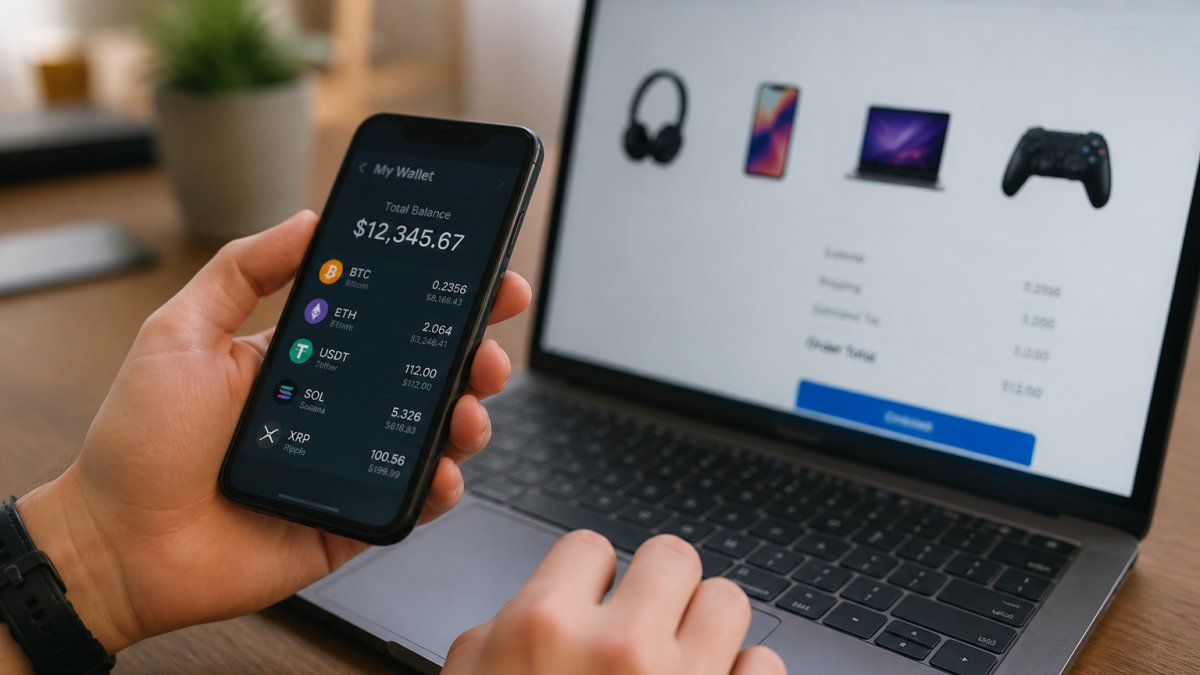
Understanding Digital Wallets and Public Keys
A digital wallet is software that stores your cryptocurrency and manages transactions. Your public key is your receiving address. It's safe to share this with anyone who wants to send you funds. Your private key is secret and grants access to your assets. Guard it like your life depends on it.
Two main wallet types exist. Hot wallets connect to the internet and offer convenience for regular purchases. Cold storage wallets stay offline and provide maximum security for long-term holdings. Most people use a hot wallet for shopping and cold storage for savings.
When you initiate a payment, you're creating a digitally signed transaction using your private key. The network verifies your signature without revealing your private key. This cryptographic process ensures only you can authorize transfers from your wallet.
Step-by-Step Checkout Process for Crypto Payments
The actual checkout flow differs slightly from traditional credit cards, but follows a logical sequence.
Selecting Your Payment Method at Checkout
Start at the electronics retailer's checkout page. Most stores that accept cryptocurrency display payment options clearly. Look for Bitcoin, Ethereum, or stablecoin logos. Select your preferred digital asset.
The retailer generates a unique payment request showing:
- The amount in cryptocurrency
- Their receiving public key (wallet address)
- A QR code for mobile wallets
- An expiration time (usually 15-30 minutes)
Copy the wallet address or scan the QR code with your mobile wallet. Double-check the address before proceeding. A single typo sends your funds to the wrong recipient permanently.
Confirming Your Transaction and Network Fees
Open your digital wallet and initiate a send transaction. Paste the retailer's public key as the destination. Enter the exact amount shown at checkout.
Here's where network fees matter. The blockchain requires a transaction fee (often called a gas fee) to process your payment. This fee goes to network validators, not the retailer. Fee amounts fluctuate based on network congestion.
Review the total before confirming:
- Purchase amount in cryptocurrency
- Network fee estimate
- Total debit from your wallet
Confirm the transaction. Your wallet creates a cryptographic signature proving you authorized this specific payment. The network broadcasts your transaction to thousands of nodes. Within minutes to hours (depending on network traffic), your transaction receives confirmation.
The retailer receives notification that funds arrived at their wallet address. Order fulfillment begins. You receive a transaction hash (a unique identifier for your payment). Save this for your records.
Supported Digital Assets and Stablecoins
Not all cryptocurrencies work equally for retail payments. Bitcoin remains the most recognized, but transaction times can stretch during peak periods. Ethereum offers faster settlement but higher volatility.
Stablecoins solve the volatility problem. These digital assets maintain a fixed value, typically pegged to the U.S. dollar. USDC and USDT are the most common stablecoins accepted by electronics retailers. Their value stays stable, so you know exactly what you're spending.
Many retailers accept multiple options:
- Bitcoin (BTC), most recognized, slower settlement
- Ethereum (ETH), faster than Bitcoin, more volatile
- USDC, stable, fast, recommended for shopping
- USDT, stable, widely accepted, slightly less transparent
- Dogecoin (DOGE), low fees, faster confirmation
- Litecoin (LTC), faster than Bitcoin, lower fees
If you're unsure which to use, stablecoins eliminate price risk between purchase and confirmation. You pay the same amount regardless of market swings.
Best Electronics Stores That Accept Bitcoin
Austin's Electronics accepts Bitcoin, Ethereum, and major stablecoins, making it seamless to buy gaming peripherals, smart home security devices, refurbished smartphones, and specialized electronics.
When you shop at Austin's Electronics with crypto, you get the same product quality and customer service as traditional payments. We handle the technical details so you don't have to. Our checkout process guides you through each step, from wallet address verification to transaction confirmation.
The landscape changes rapidly. Before shopping, verify current payment methods on the retailer's website. Payment acceptance policies update frequently as blockchain adoption accelerates.
Is Buying Electronics with Bitcoin Taxable?
This matters more than most people realize. The IRS treats cryptocurrency as property, not currency (Digital assets). When you spend Bitcoin on electronics, you've triggered a taxable event.
Here's how it works. You report the fair market value of the cryptocurrency at the moment of sale. If you bought Bitcoin at $30,000 and spent it when Bitcoin traded at $35,000, you owe capital gains tax on that $5,000 difference.
Track these details for every crypto purchase:
- Date of transaction
- Amount of cryptocurrency spent
- Fair market value in U.S. dollars at transaction time
- Description of what you purchased
- Transaction hash for verification
Short-term capital gains (held less than one year) are taxed as ordinary income (Digital assets). Long-term gains (held over one year) receive preferential rates. Losses offset gains and reduce your tax burden.
Many people overlook this. The IRS increasingly scrutinizes unreported crypto transactions. Keep meticulous records. Use tax software that tracks crypto sales, or consult a tax professional familiar with digital assets. The penalty for underreporting far exceeds the tax you'd owe if you calculate correctly upfront.
How to Use Crypto Debit Cards for Online Shopping
Crypto debit cards bridge traditional commerce and digital assets. These cards convert your cryptocurrency to U.S. dollars instantly, then process the transaction like a normal debit card.
Here's the process:
- Load cryptocurrency into the debit card's associated wallet
- The card issuer converts your crypto to dollars at current market rates
- Use the card at any retailer accepting Visa or Mastercard
- The merchant never knows you paid with crypto
This approach eliminates wallet address complications. You simply swipe or tap like any debit card. The card issuer handles blockchain transactions behind the scenes.
Fees vary by provider and card tier. Some charge monthly membership fees. Others take a percentage of each transaction. Compare options before choosing. The convenience of a debit card sometimes costs more than direct wallet transfers, so calculate your actual expenses.
Austin's Electronics accepts traditional payment methods directly, but if you prefer the debit card route, you'll find the experience familiar and straightforward.
Security and Transaction Safety Best Practices
Cryptocurrency transactions are irreversible. Once confirmed, you cannot undo a payment. This permanence demands careful security practices.
Private Key Management and Cold Storage
Your private key is everything. Anyone with access can drain your wallet. Store private keys offline whenever possible. Cold storage means keeping your keys on a device disconnected from the internet.
Hardware wallets provide the strongest cold storage. These physical devices look like USB drives and hold your private keys offline. When you need to make a purchase, connect the hardware wallet to your computer, authorize the transaction, then disconnect. Your keys never touch the internet.
Paper wallets offer another cold storage option. Print your public and private keys on paper, then store the paper in a safe or safe deposit box. This method requires careful handling to avoid loss or damage.
Never store private keys in email, cloud storage, or messaging apps. Never type them into websites you don't completely trust. Never give them to customer service representatives, even if they claim to help with your account.
Handling Failed Transactions and Network Congestion
Sometimes transactions fail. Network congestion slows processing. Gas fees spike during peak periods. Here's what to do.
If your transaction shows "pending" for hours, the network is congested. You have two options. Wait for the network to clear (usually within 24 hours), or resubmit with a higher gas fee to jump the queue.
If a transaction fails entirely, your cryptocurrency returns to your wallet. Check your wallet balance to confirm. The failed transaction consumed minimal network fees. You can retry with different parameters.
Document everything:
- Transaction hash from your wallet
- Amount sent
- Recipient address
- Timestamp
- Network fee paid
- Current transaction status
If you're purchasing from Austin's Electronics and experience transaction issues, contact our support team with your transaction hash. We can verify receipt of funds and troubleshoot problems. Providing this documentation speeds resolution.
Network congestion teaches an important lesson: avoid sending large amounts during peak trading hours. Weekday mornings and evenings see the heaviest traffic. Early mornings and weekends typically offer faster, cheaper transactions.
Common Mistakes to Avoid When Paying with Crypto
Most problems stem from preventable errors. Learn these mistakes before they cost you.
Sending to the wrong address. Wallets don't validate addresses for typos. A single character error sends funds permanently to an inaccessible wallet. Always copy and paste addresses.
Forgetting to account for network fees. Many people calculate the exact amount needed for a purchase, then realize network fees require additional funds.
Confusing public and private keys. Sharing your public key is fine. Sharing your private key is catastrophic. If someone asks for your private key, they're attempting theft.
Ignoring tax implications. Spending cryptocurrency triggers tax events. Failing to report these creates audit risk. Many people discover this problem months later when filing taxes.
Using unverified wallet software. Fake wallet apps steal private keys. Download wallets only from official sources. Verify the publisher before installing.
Rushing through checkout. Cryptocurrency transactions move fast. Pausing to verify details prevents costly mistakes. Review every element before confirming:
- Recipient address correctness
- Amount accuracy
- Network fee reasonableness
- Wallet balance sufficiency
Storing backups carelessly. If your wallet device fails, you need recovery phrases or private key backups. Store these in multiple secure locations.
Ignoring price volatility. Between initiating a transaction and confirmation, cryptocurrency prices can swing significantly. This doesn't affect your payment amount, but it affects your tax basis.
Austin's Electronics customers who pay with cryptocurrency should take these precautions seriously. Our checkout process guides you through verification steps, but the responsibility for security rests with you.
Cryptocurrency payments for electronics offer freedom and control that traditional methods don't provide. The process grows simpler as you gain experience.
Frequently Asked Questions
Is buying electronics with Bitcoin taxable?
Yes. The IRS treats cryptocurrency as property, not currency. When you use Bitcoin to purchase electronics, you trigger a taxable event. You must report the fair market value of the Bitcoin at the time of the transaction as income, and you may owe capital gains tax if the Bitcoin appreciated since you acquired it. Keep records of transaction dates, amounts, and fair market values for tax filing purposes.
Do I need a digital wallet to buy electronics with crypto?
Yes. A digital wallet stores your private keys and allows you to send cryptocurrency to merchants. You can use a hot wallet (online, faster but less secure) or cold storage (offline, more secure but slower). Some retailers accept QR code payments directly from your wallet, while others use payment gateways that handle the blockchain transaction for you. Choose a wallet compatible with the digital assets the electronics retailer accepts.
What happens if my crypto transaction fails during checkout?
Failed transactions can occur due to network congestion, insufficient gas fees, or wallet compatibility issues. Check your transaction hash on the blockchain to confirm whether the payment was actually sent. If the transaction is pending, you may need to increase the network fee to prioritize it. If it failed, contact the retailer's support team with your transaction details. Most merchants have refund policies for incomplete orders, though processing times vary depending on blockchain confirmation speeds.
How do crypto debit cards work for buying electronics online?
Crypto debit cards convert your digital assets to fiat currency instantly during checkout, allowing you to shop at retailers that don't directly accept cryptocurrency. You load cryptocurrency into the card's associated account, and the card processes the purchase like a standard debit card. This method simplifies the checkout flow and provides merchant integration without requiring the retailer to handle blockchain transactions. However, you'll pay conversion fees and the card issuer may charge transaction fees.